

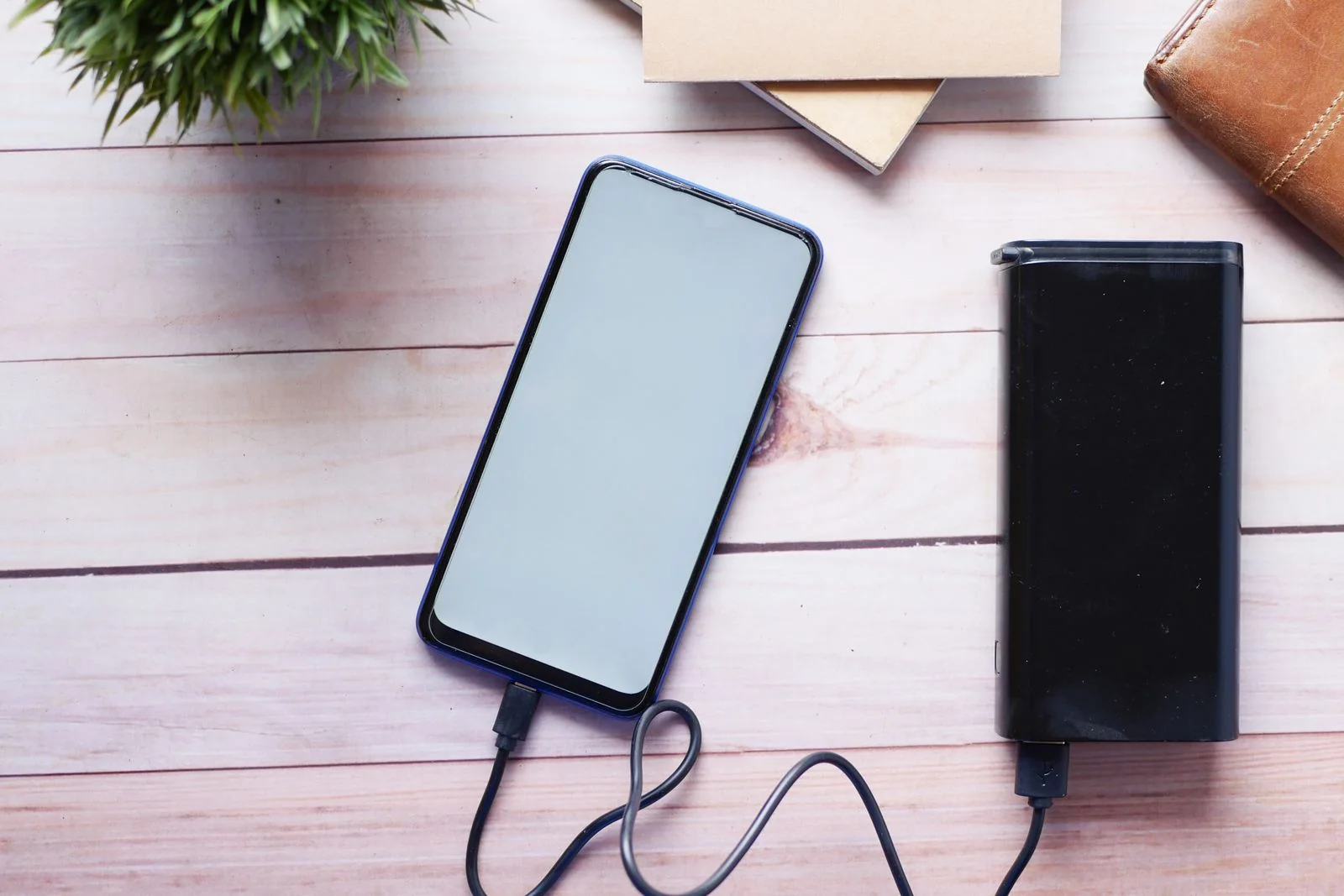
Sebaraya Tech – The mAh number on a power bank tells you how much charge its cells hold, but airlines care about watt-hours (Wh), which also factors in voltage. To convert, multiply mAh by the battery’s voltage and divide by 1,000.
That small calculation decides whether your power bank flies with you. Since March 2026, aviation rules for power banks also changed in ways many travelers haven’t heard about yet.
What mAh and Wh Actually Measure
mAh (milliamp-hours) describes how much electric charge a battery can store. Wh (watt-hours) describes how much energy it stores.
The difference is voltage. Two batteries with the same mAh can hold different amounts of energy if one runs at a higher voltage.
That’s why aviation authorities use Wh. It compares batteries fairly, no matter how they’re built.
How to Convert mAh to Wh
The FAA gives the formula as voltage multiplied by amp-hours. Since 1,000 mAh equals 1 Ah, the practical version is:
Wh = mAh × V ÷ 1,000
Use the voltage printed on your power bank’s label. Many newer batteries also print the Wh rating directly, which saves you the math.
Here’s how common capacities work out, assuming a label that lists 3.7 V (editor’s calculation):
| Capacity | At 3.7 V | Under 100 Wh? |
|---|---|---|
| 10,000 mAh | 37 Wh | Yes |
| 20,000 mAh | 74 Wh | Yes |
| 27,000 mAh | 99.9 Wh | Just under |
| 30,000 mAh | 111 Wh | No |
Notice how close 27,000 mAh sits to the line. If the label lists a slightly higher voltage, the same bank can cross 100 Wh. Always check your own label rather than this table.
The 100 Wh Rule on Flights
Up to 100 Wh, a power bank doesn’t need airline approval under FAA guidance. Under the international rules updated in 2026, 100 Wh is the general limit for power banks.
In the IATA table, power banks between 100 and 160 Wh are now listed as forbidden. Older guidance allowed that range with airline approval, so you may still see it mentioned online.
Power banks always go in your carry-on, never in checked luggage. If your cabin bag gets checked at the gate, take the power bank out and keep it with you.
What Changed in March 2026
An ICAO amendment took effect on 27 March 2026, and IATA published guidance for airlines on 31 March. The key changes for passengers:
- You can carry no more than two power banks per person.
- Power banks must not be recharged while on board.
- Using a power bank to charge your phone during the flight is discouraged.
When these rules are enforced depends on each country’s adoption process, and airlines can set stricter limits on top. The changes are due to be built into the next edition of the dangerous goods rules from 1 January 2027.
So the safest habit is simple: check your airline’s battery page before you pack.
Packing a Power Bank Safely
Short circuits are the main risk with loose batteries. Keep the terminals away from keys and coins by using the original packaging, a pouch, or tape over exposed contacts.
Don’t fly with a power bank that’s swollen, damaged, or part of a recall.
If a battery or device starts overheating, smoking, or swelling during the flight, tell the cabin crew immediately.
Choosing a Power Bank for Travel
If you fly often, a bank under about 25,000 mAh at 3.7 V leaves comfortable room below 100 Wh (editor’s calculation).
Prefer a model that prints the Wh rating clearly. It saves an awkward conversation at security, where staff may not do the math for you.
Before your next trip, flip your power bank over and find the Wh figure. If it isn’t there, do the three-second calculation and write it on a sticker.
Komentar Ditutup! Anda tidak dapat mengirimkan komentar pada artikel ini.